Relationship Triggers: Why Your Reaction Is Often About More Than the Situation
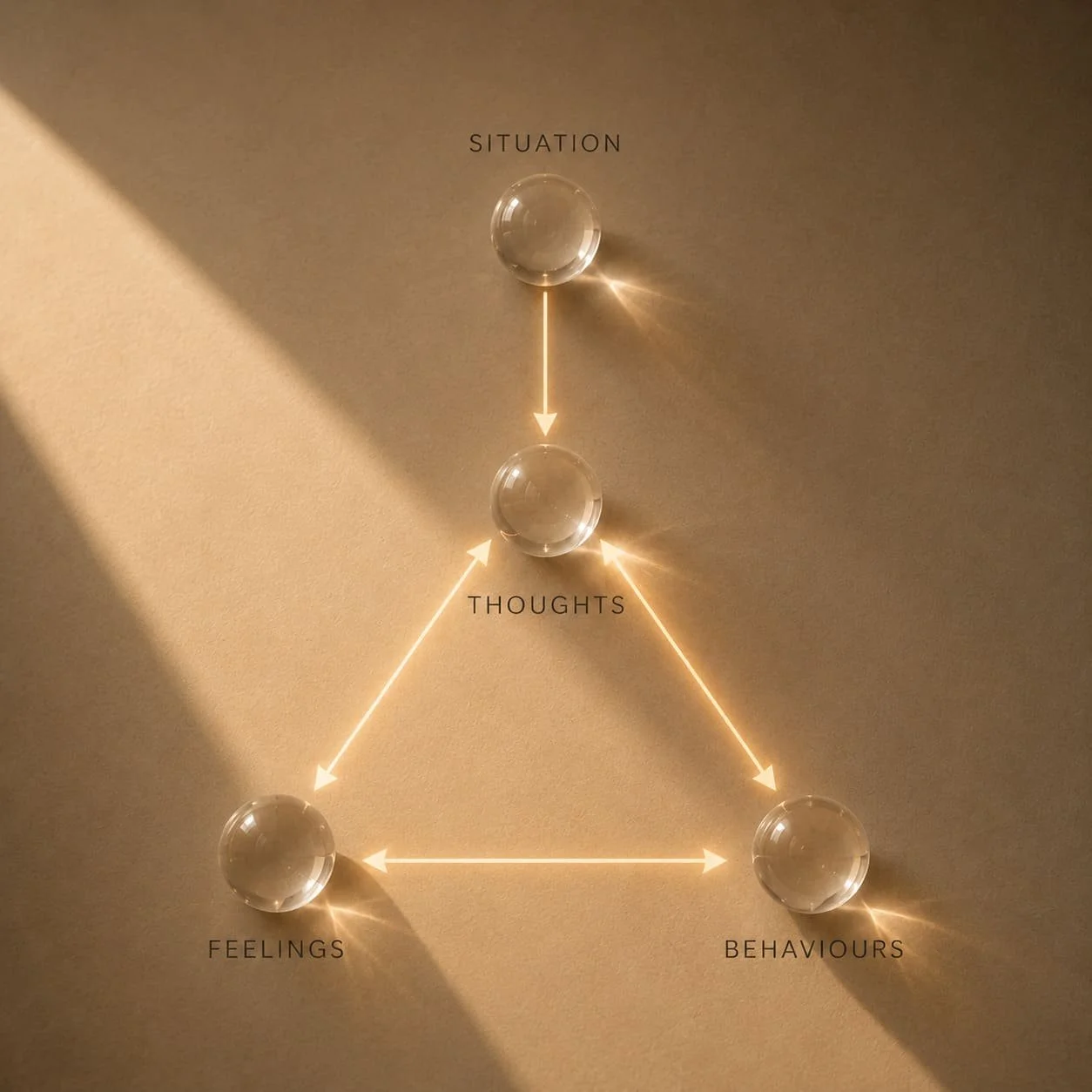
A trigger is not only about what happened. It is about what the nervous system believes the situation means.
A trigger rarely begins with the present moment alone.
Something happens. A message arrives later than expected. A tone sounds different. A partner becomes quiet. A disagreement opens. On the surface, the situation may look small. Internally, it can feel much larger than the event itself.
That difference is where triggers live.
A trigger is not simply a reaction to what happened. It is a reaction to the meaning the nervous system assigns to what happened. The body does not respond only to objective reality. It responds to perceived threat, remembered pain, and learned emotional predictions.
This is why two people can experience the same situation and respond in completely different ways. One person may feel calm. Another may feel abandoned, accused, controlled, rejected, trapped, dismissed, or unsafe. The event is the same. The internal meaning is not.
What a Trigger Actually Is
A trigger is the activation of a previously learned emotional response.
In attachment and relationship work, triggers often arise when a present situation touches an older belief system. The reaction feels immediate because the nervous system recognizes a familiar emotional pattern before the conscious mind has had time to evaluate the present clearly.
This is why triggered responses can feel so convincing. They do not arrive as possibilities. They often arrive as certainty.
He is pulling away. She does not care. I am being controlled. I am being blamed. I am about to be abandoned. I am too much. I am powerless.
In an activated state, these interpretations do not feel like interpretations. They feel like facts. The mind begins organizing around them, the body responds to them, and behavior often follows before the person has had space to ask a more regulated question: what actually happened, and what am I adding to it?
The Trigger Chain
One useful way to understand triggers is through a sequence often called the trigger chain.
Every trigger begins with a situation — the visible event. A partner does not reply. Someone asks a question. A boundary is named. A facial expression changes. A conversation becomes difficult. At this stage, no emotion has been created yet.
The situation then touches the belief system — the deeper layer where attachment wounds and core meanings live. Beliefs such as I am easy to leave, my needs create rejection, conflict means abandonment, or being misunderstood means I am not safe.
The belief generates a thought — the conscious interpretation that arises from the wound. They are ignoring me. They are attacking me. They do not love me. They will leave.
The thought produces emotion. Fear, shame, grief, guilt, anger, helplessness, sadness, or numbness may appear. These emotions feel completely real — because they are real. The feeling is real. The interpretation may or may not be.
The emotion then activates the nervous system. Fight, flight, freeze, fawn, shutdown, urgency, withdrawal, or appeasement follows.
Finally, the behavior appears. A person sends the long message, withdraws, accuses, stonewalls, overexplains, becomes cold, or tries to force certainty.
The behavior is what becomes visible in the relationship. But it is the end point of an internal sequence that began much earlier — and it belongs entirely to the triggered person, not to the situation that started the chain.
The trigger is information. It reveals the belief, wound, or fear that is asking to be seen, understood, and ultimately worked with.
Why the Meaning Matters More Than the Event
Triggers become easier to understand when we separate the event from the meaning assigned to it.
A delayed reply can mean many things. The person is working. The person is tired. The person forgot. The relationship is still intact. But to a nervous system organized around abandonment, the delayed reply may mean: I am being left.
A partner asking for space can mean: I need time to process so I can return more clearly. But to a nervous system organized around rejection, it may mean: I am unwanted.
A partner expressing hurt can mean: something affected me and I want us to understand it. But to a nervous system organized around shame, it may mean: I am bad, I am being blamed, I need to defend myself.
The trigger is often not the event. The trigger is the meaning the nervous system has learned to attach to the event.
How Triggers Become Relationship Patterns
When a trigger is not recognized, the response can create the very dynamic the person fears.
A person who fears abandonment may protest, demand, test, or seek immediate reassurance in ways that overwhelm the other person. A person who fears engulfment may withdraw or shut down in ways that activate their partner's abandonment fear. A person who carries shame may hear feedback as accusation and respond defensively instead of relationally.
Over time, each partner begins responding not only to what is happening now, but to the history of previous triggered responses. A tone is no longer just a tone. Silence is no longer just silence. A question is no longer just a question.
The nervous system starts preparing for the old outcome before the present conversation has had a chance to become something new.
What Changes in Structured Work
Trigger work is not about convincing yourself that your reaction is wrong. It is about understanding what your reaction is organized around.
The first shift is learning to identify the trigger chain while it is happening. What happened? What did I immediately make it mean? Which belief did it touch? What emotion appeared first? What behavior am I pulled toward?
The second shift is slowing the meaning-making process. A regulated question becomes possible: what do I actually know, and what am I assuming?
The third shift is working directly with the belief system underneath the trigger. If the same meaning appears again and again, the work is not only communication. It is belief-level change.
The fourth shift is building enough nervous system capacity to stay present while the old response is activated. This is where DBT-informed distress tolerance and emotional regulation become essential. The goal is not to suppress the trigger. It is to create enough space that the trigger no longer has to choose the behavior.
If you recognize strong emotional reactions in your relationships and want to understand what is underneath them, the Attachment & Relational Pattern Audit at securely-attached.com is a structured starting point. It maps your specific attachment architecture — the triggers, belief systems, core wounds, and nervous system responses that shape your relational patterns.