FREE RESOURCES
Practical Tools for Real Change
Free worksheets, guides, and reflection tools to help you understand attachment patterns, emotional regulation, core wounds, belief systems, and relationship dynamics.
Understanding yourself is often the first step toward creating healthier relationships, stronger communication, and greater emotional security. This resource library is designed to support greater self-awareness and meaningful change — whether you are beginning your personal growth journey or deepening work you have already started.
Explore the Resource Library
ATTACHMENT
Attachment Style Worksheets
Explore the beliefs, behaviours, emotional patterns, and relationship dynamics commonly associated with different attachment styles.
EMOTIONAL REGULATION
Emotional Regulation Tools
Practical exercises inspired by DBT skills and attachment-informed approaches to help you navigate difficult emotions more effectively.
CORE WOUNDS
Core Wounds & Belief System Exercises
Identify the underlying beliefs that influence your relationships, emotional responses, communication, and self-perception.
RELATIONSHIPS
Relationship Reflection Guides
Thoughtful prompts and exercises designed to help you better understand recurring patterns, needs, boundaries, and relationship dynamics.
COMMUNICATION
Communication Worksheets
Develop greater clarity, emotional awareness, and confidence in expressing needs, boundaries, and concerns.
SECURE ATTACHMENT
Secure Relating Tools
Resources to support more secure responses, healthier self-connection, and practical integration in everyday life.
New Resources Are Added Regularly
Receive thoughtful insights, practical tools, and early access to new worksheets and guides on attachment patterns, emotional regulation, communication, and secure relating.
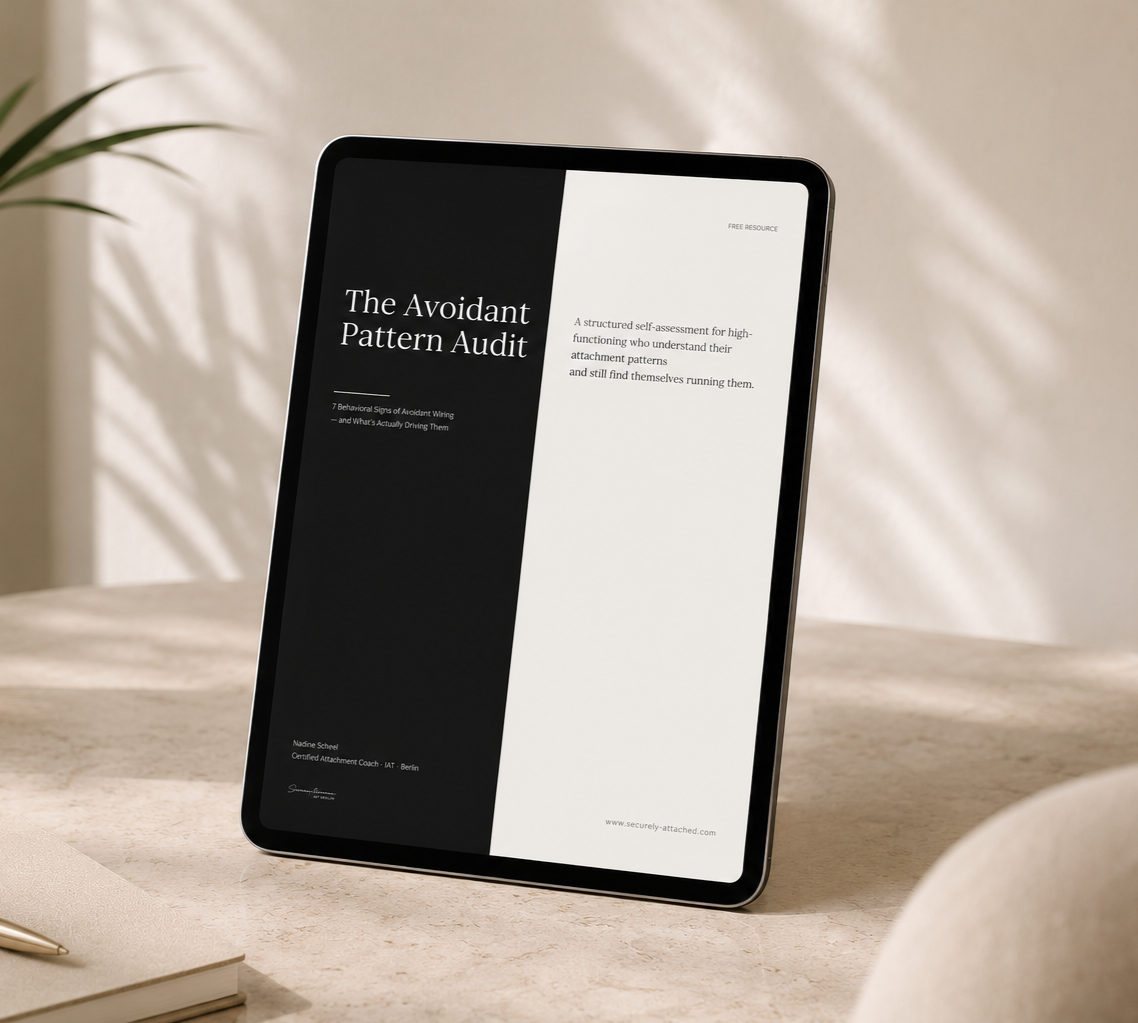
Free Avoidant Attachment Pattern Audit
A structured self-assessment for people who pull away, shut down, or lose clarity when closeness becomes real.
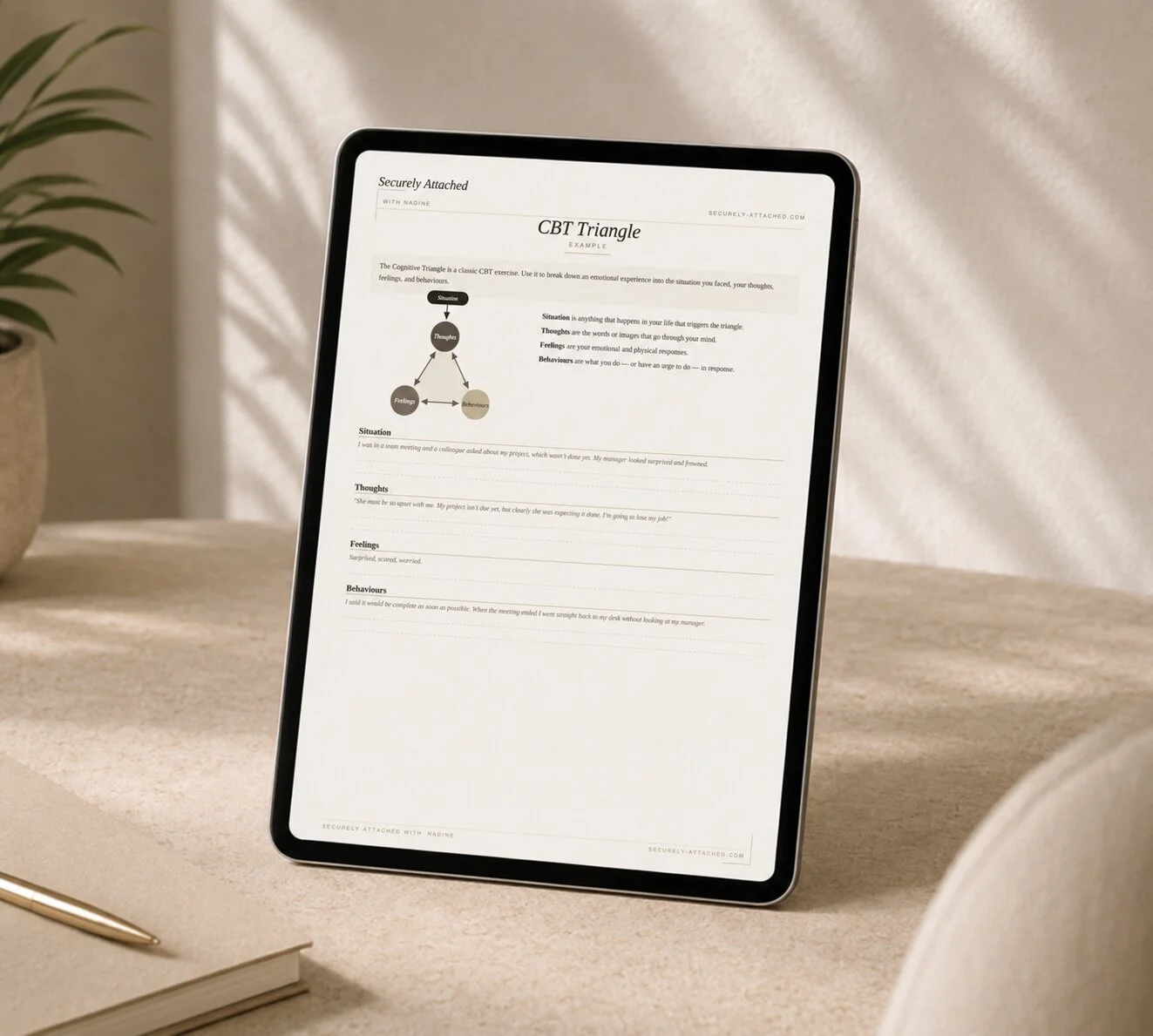
A simple CBT self-reflection tool to help you understand emotional triggers, identify thought patterns, and see how feelings and behaviours influence each other.
CBT Triangle Worksheet